Skip to content

Creative GOAT

Brownfield scanning  ·  Reverse design

Your plant changed.
Your drawings didn’t.

Creative GOAT captures visible existing conditions and turns them into usable 3D information for brownfield modifications and equipment retrofits. The capture, CAD development and interface checks are defined around the decision, deliverable and field conditions your project requires.

Sudbury, Ontario  ·  Serving industrial teams across Canada & the United States
From uncertainty to install-ready
Field reality
Point cloud
Design-ready CAD
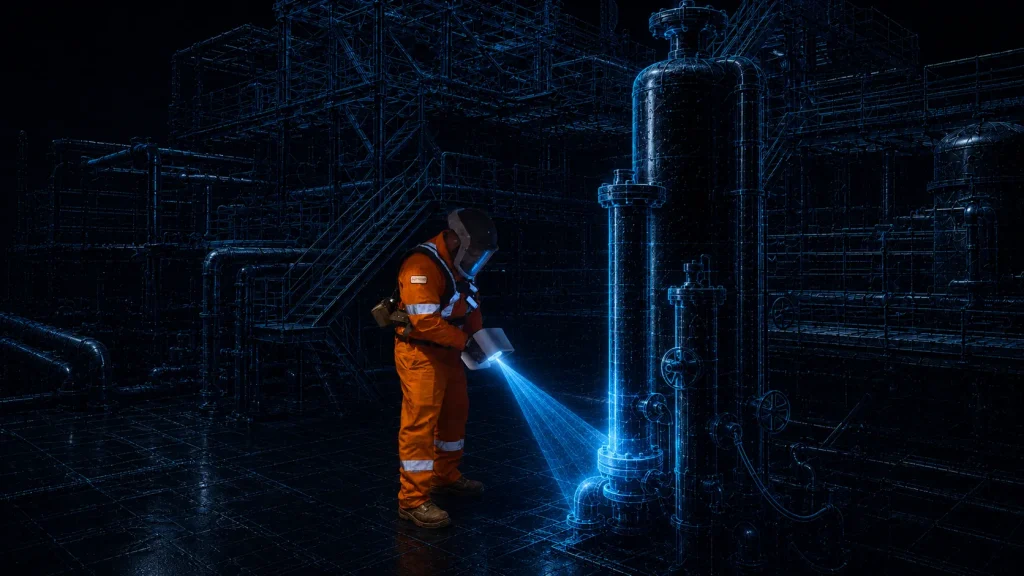
Illustration of a technician using a handheld 3D scanner to capture pipework and a vessel inside a process plant
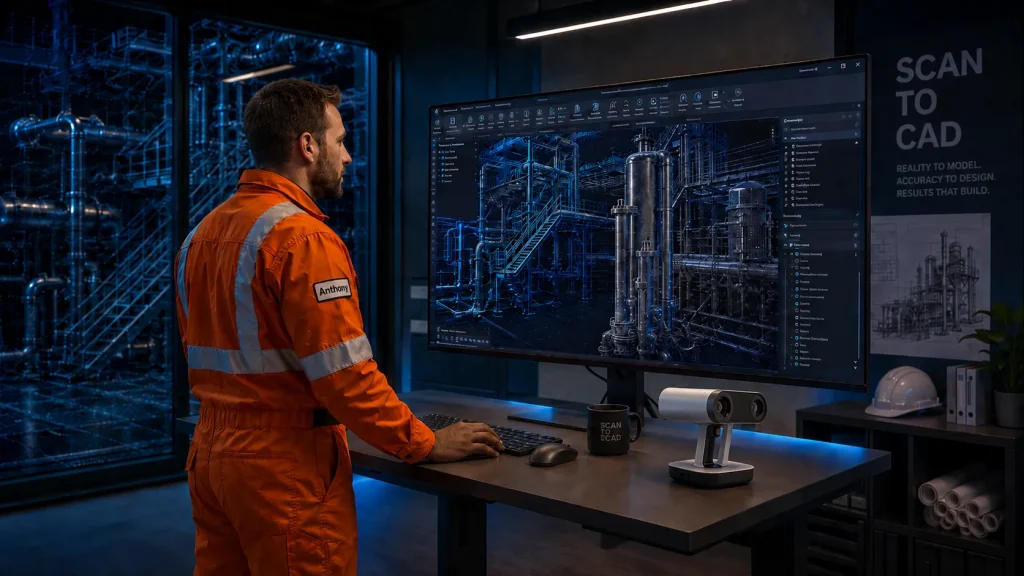
Illustration of a designer turning 3D scan data into a CAD model of a process plant on screen
The moment that matters

A bad dimension rarely looks expensive —
until installation day.

The real cost is not the scan. It is discovering too late that the space, the tie-in, or the component does not match the information everyone trusted.

01
The crew is waiting

Field rework

Parts arrive on site and need cutting, shimming, or modification because the design came from the wrong reality.

02
The window is closing

Shutdown delays

Installation time is consumed solving dimensional conflicts that could have been found on screen, before installation.

03
The budget takes the hit

Paying twice

Material, labour, freight, and management attention are spent again correcting work that was already scoped and approved.

The Creative GOAT belief

Starting from measured, traceable field information gives the project team a clearer basis for design, coordination and review.

Measure first. Design second.
The plan

Replace assumption with a
measurable process.

You do not need to become a scanning expert. You need a specialist who works alongside your engineer, fabricator, and installer — with a clear path from field conditions to usable project information.

01

Capture visible conditions

Capture the agreed plant, equipment and surrounding interfaces within the available access and line of sight.

02

Register and organize

Relate the captured data in a defined reference so the required conditions can be measured and reviewed together.

03

Develop the required geometry

Convert selected field information into the point-cloud, CAD, drawing or technical handoff the next team needs.

04

Check defined interfaces

Review the critical clearances and relationships included in the project scope and identify remaining verification needs.

Explore Common Challenges

Is this the problem you’re facing?

These examples illustrate the types of reverse-design and brownfield-retrofit challenges Creative GOAT can help solve. Every solution is developed around your equipment, site conditions, and project requirements.

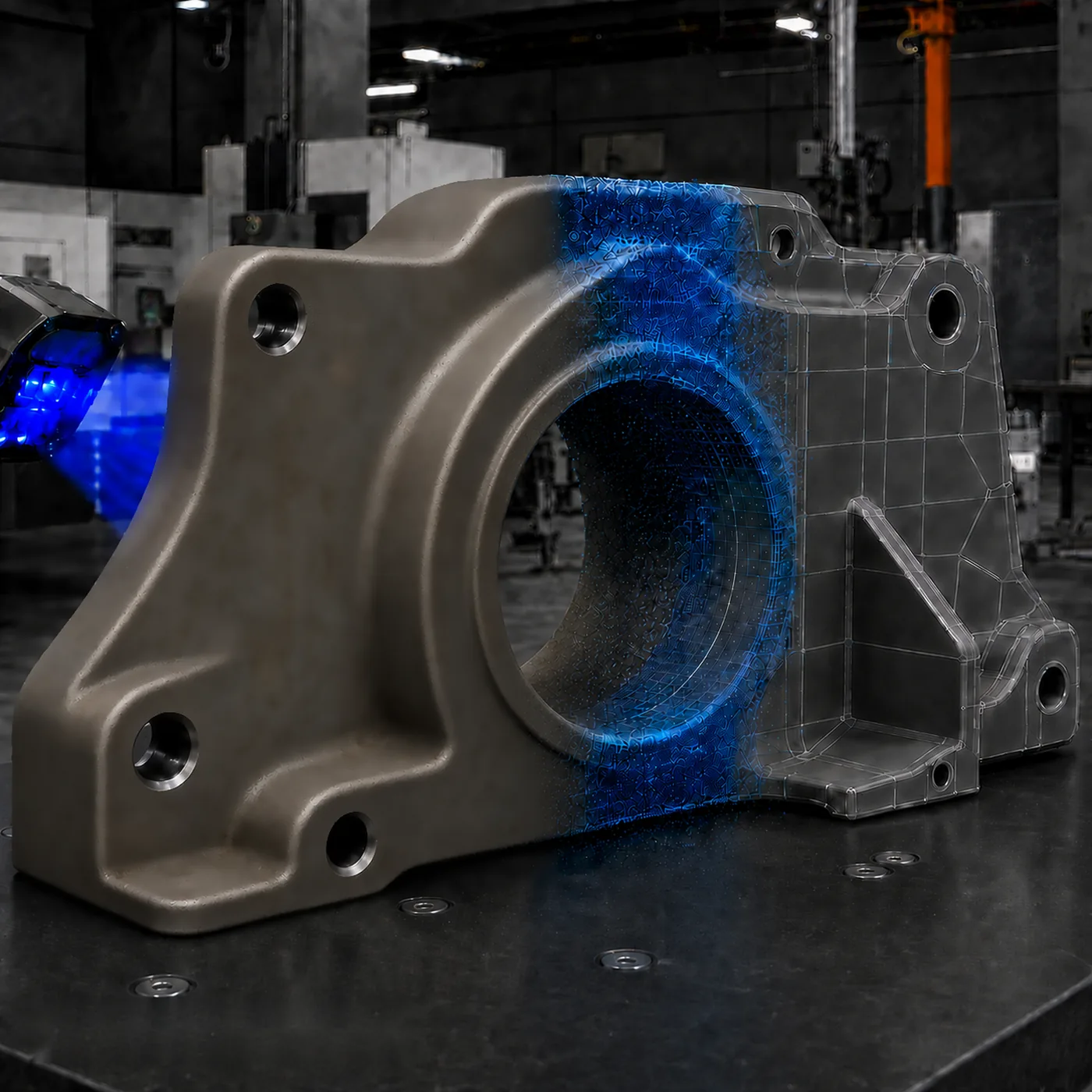
Worn cast-metal component on a shop bench, the left half shown as the real part and the right half resolving through blue scan data into a CAD surface model.
Real part → Scan data → CAD
Example Scenario 01  ·  Reverse design

The component existed.
The drawings didn’t.

A worn critical component still held the geometry needed to reproduce it — but that geometry existed nowhere on paper.

The conflict

Replacement was blocked because no manufacturable model or documentation survived.

The shift

We capture the physical part, rebuild the measured geometry, and issued a clean, editable CAD model.

The result

The shop could order and fabricate from a drawing set that matches the part in hand.
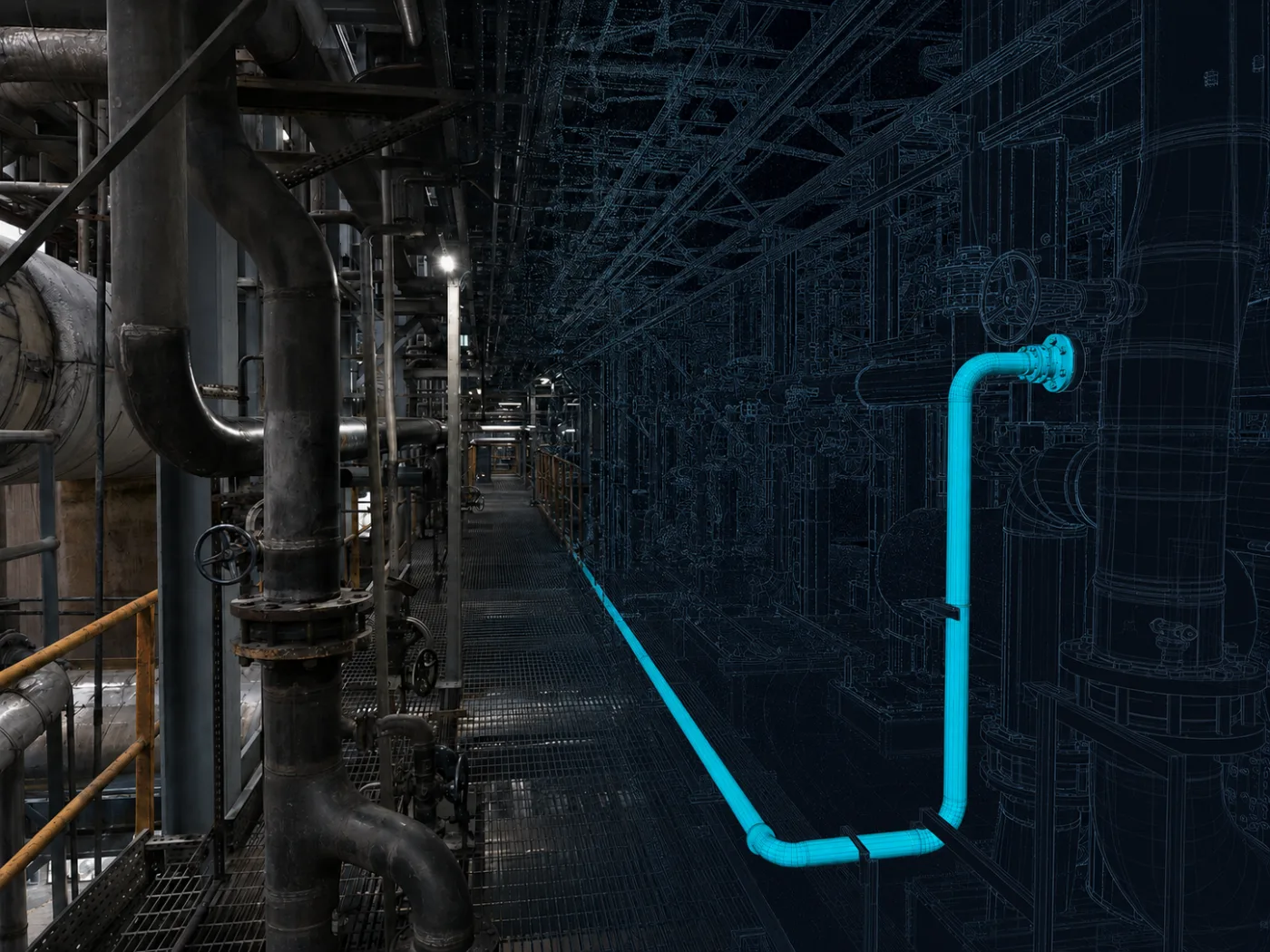
Existing plant piping on the left resolving into a measured wireframe model on the right
Existing plant → Measured model → New work
Example Scenario 02  ·  Brownfield retrofit

The retrofit was new.
The uncertainty was old.

New equipment had to land inside a facility whose existing drawings no longer described what was actually there.

The conflict

Existing drawings missed tie-ins, supports, and obstructions added over years of operation.

The shift

We capture the operating environment and design the new work inside a measured record of actual site conditions.

The result

Conflicts move from the installation window to the design review — where they are more economical to solve.

Start with your problem

What do you need
certainty about?

Buyers do not need to diagnose the service first. They only need to recognize the situation they are already facing.

01
Facilities + retrofits
Your facility changed. Did the drawings?

Brownfield 3D Scanning

Capture the plant as it exists today — before upgrades, tie-ins, or shutdown work begins.

02
Parts + equipment
The part exists. The documentation doesn’t.

Reverse Design

Turn worn, obsolete, or undocumented components into clean, editable, manufacturable CAD.

03
Concept + prototype
You know what it should do. Now make it real.

Product Development

Move from early concept through modelling, prototyping, and production-ready documentation.

04
Drawings + fit-up
The model is only useful if the shop can build it.

Fabrication Support

Give fabricators clear drawings, verified geometry, and fit-up confidence before steel is cut.

05
Cutting + welding + assembly
You need the work built, not just drawn.

Fabrication Services

Basic fabrication — cutting, forming, welding, assembly, and repairs — produced straight from our own measured models and shop-ready drawings.

Why Creative GOAT

One connected geometry workflow — from field capture to usable project information.

01

Field capture connected to the handoff

Capture, registration, CAD development and technical documentation are planned around the downstream use.

02

A clear scope before work begins

Deliverables, assumptions, access, schedule basis, fees and change control are defined in the quotation.

03

Agreed files and responsibilities

Formats, intended use, ownership or licence, verification points and unresolved conditions are defined for the project.

The next step

Start with the part, site, or problem you have.

Send photographs, drawings, or a plain-language description. We will identify what needs to be captured, what you will receive, and the path forward — reviewed within one business day.

What to send

What you are building, replacing, or changing

Photographs, drawings, or site information you already have

Your location, target date, and what is at risk

Most requests are reviewed within one business day.